
Growing, Educating, and Connecting Communities
Dry Farm 2025 Highlights
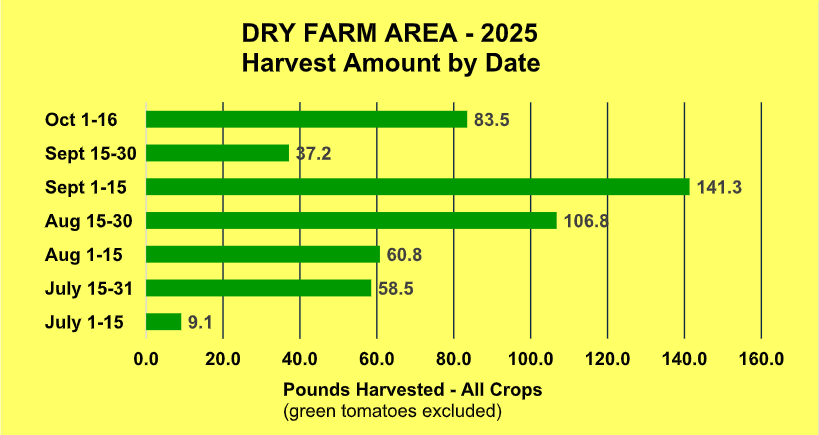
Total Amount Harvested from Dry Farm area in 2025: 499 lbs. were harvested in 2025 between July 7 and October 16, with the greatest proportion between August 15 and September 15.
Harvest for cucumbers and squashes began in early July; tomatoes began in mid to late July, with varieties with smaller fruit ripening earlier than those with larger fruit.
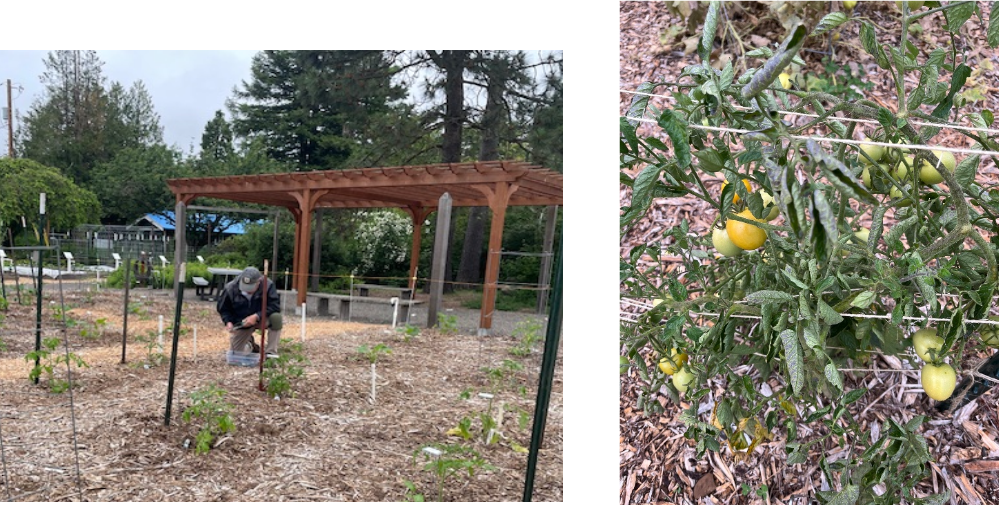
Dry farm area June 5 (left); Jaune Flamme tomato in dry farm area showing leaf curling September 29 (right)
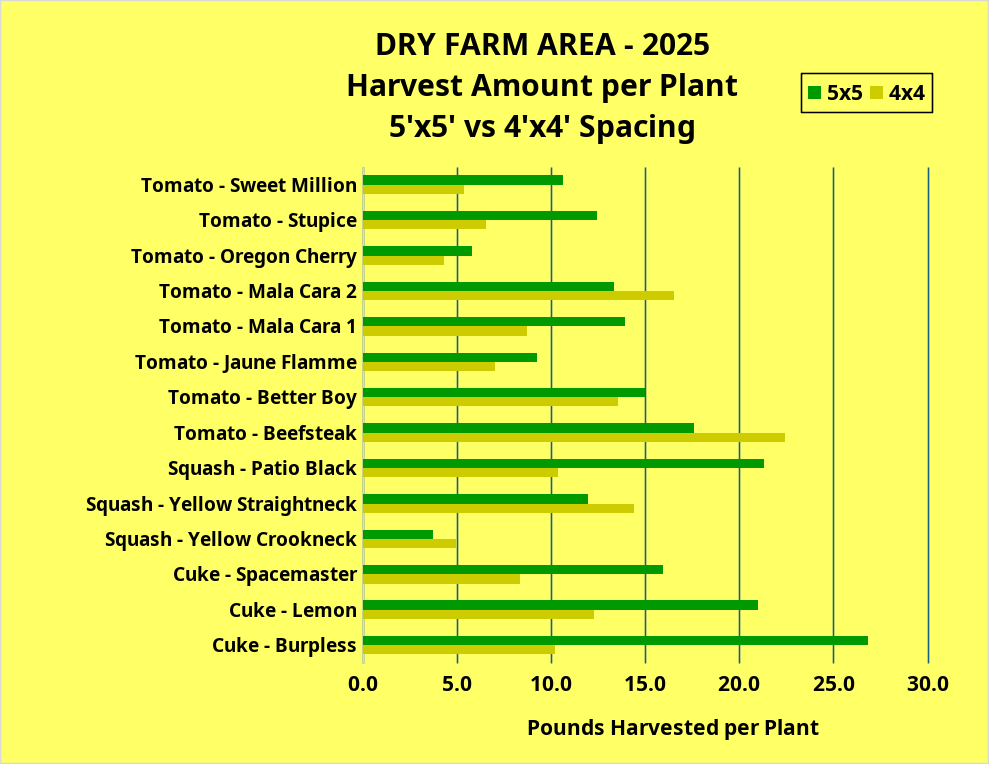
Production per Plant by Crop Type: Cucumbers produced the most pounds per plant; then tomatoes (including both ripe and green); then zucchini. Acorn squash produced the fewest pounds per plant.

Spacing Test: The dry farm area was divided into 2 parts, with plants in one part given 25 square feet per plant and 16 square feet per plant in the other part. The chart below shows the comparison between spacings for those plants where there was at least one plant of each variety planted at each spacing.
Generally, the wider 5’x5’ spacing, where each plant had 25 sq ft, resulted in higher production. Some exceptions were the Yellow Straightneck and Crookneck squashes and 2 varieties of tomatoes – Beefsteak and Mala Cara 2 (plants grown from Mala Cara seed that looked very different than the normal Mala Cara); for these, we saw higher production with the 4’x4’ spacing (16 sq ft per plant).
Because this is a relatively small area where numbers of plants of each variety were limited and there was variation in conditions for each plant (e.g., amount of sun each got during the day and the number of competing adjacent plants), these results are not statistically significant. But they do show that for the most part plants with more space, and therefore greater access to more soil moisture, produce more fruit.
Pests and Diseases: Squash bugs were present in the dry farm area. We inspected the underside of leaves of each squash and cucumber plant multiple times a week (once squash bugs were detected in the demo garden) looking for nymphs, adults and egg masses. If found, they were removed and destroyed. One zucchini plant died early before it could produce fruit; it is quite possible its mortality was due to squash bug feeding although it was difficult to diagnose definitively.
Damage by other pests such as birds or slugs was minor this year.
Powdery mildew was severe on cucumbers and squash, but only later in the season (September and October). One cucumber, Burpless, had noticeably less powdery mildew and produced longer than the other cucumber varieties.
Other Observations and Notes: Many of the tomatoes had leaf curling that showed up in late summer. It may have been due to water stress at the deeper rooting zone. In late September and early October of 2025, soil moisture readings indicated soil moisture stress about twice that in 2024 at the 1’ depth and, perhaps more importantly, about five times that in 2024 at the 4’ depth.
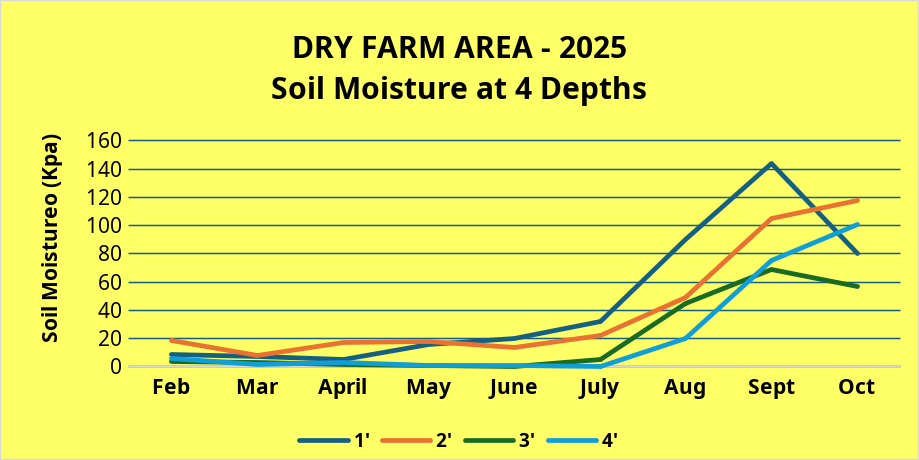
In chart above lower numbers indicate greater soil moisture and higher numbers indicate lower soil moisture. Data used for this chart were mid-month moisture readings.
Dry Farm 2024
In 2024, we grew melons and tomatoes in the dry farm area. All were planted on June 20 on a 5’x5’ spacing (25 square feet per plant). Apart from rain, they were only watered at the time of planting.
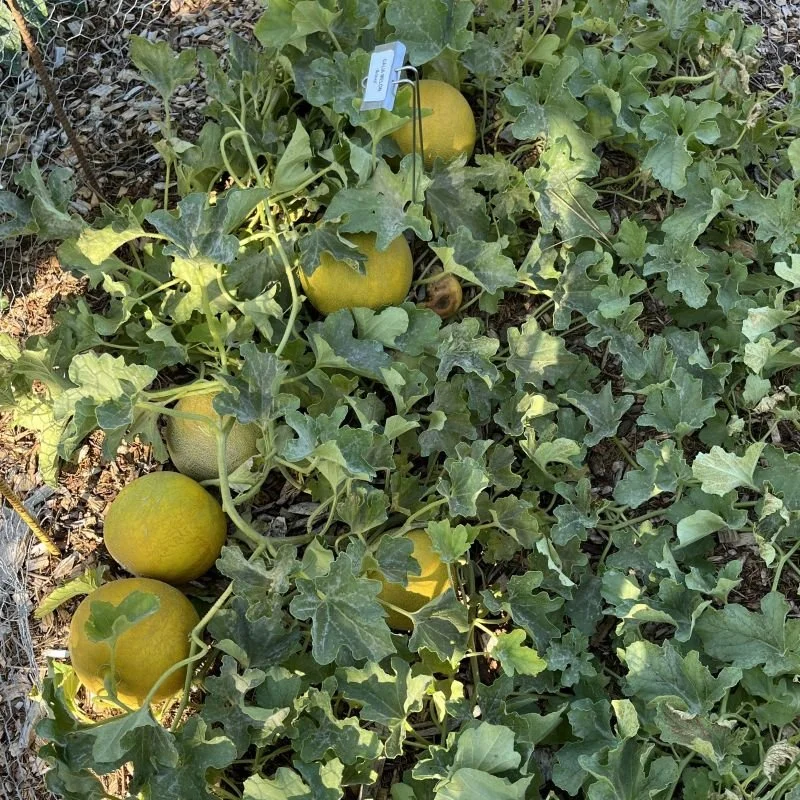
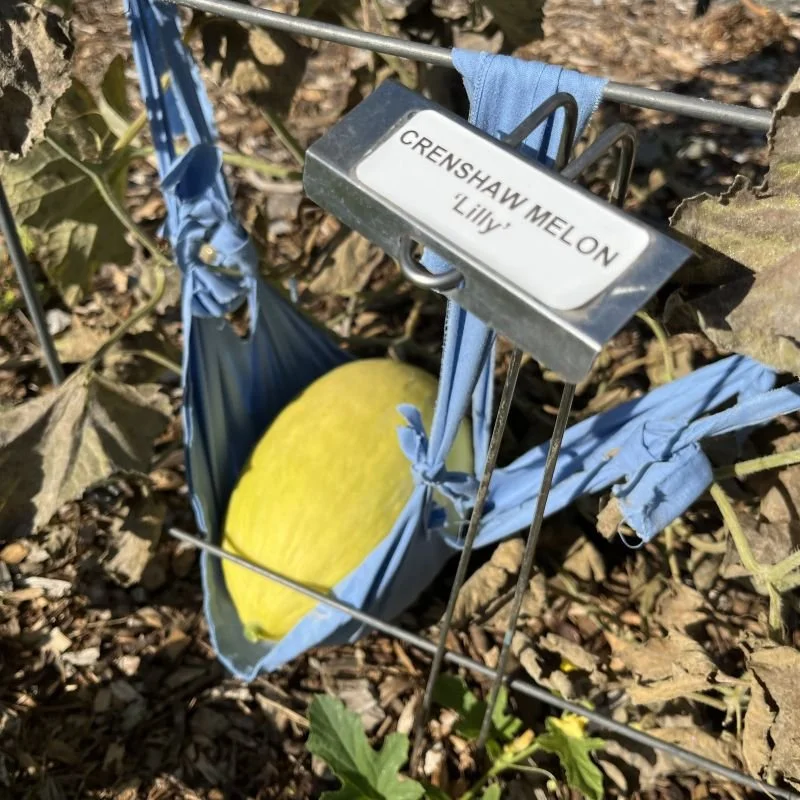
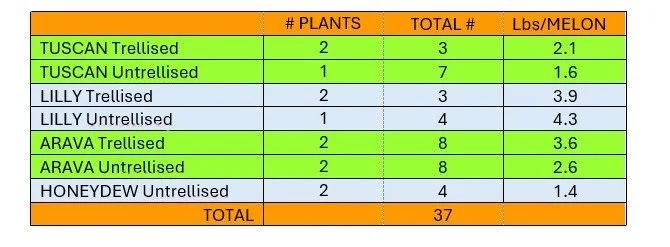
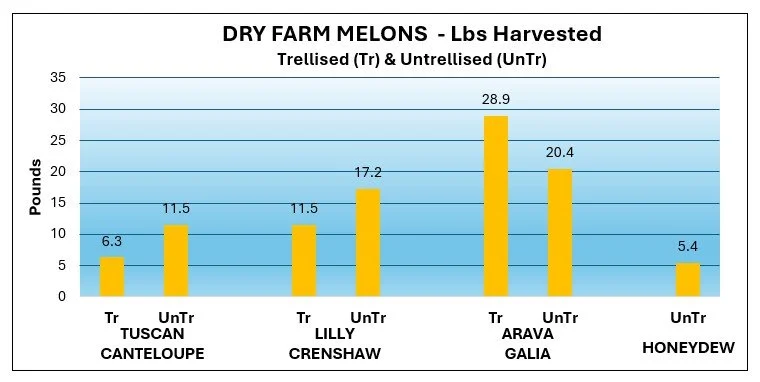
MELONS: We were interested in seeing if trellised melons survived and produced as well as those that weren’t trellised. Four varieties of melons were planted (from seedlings) with approximately half of the plants trellised, using square tomato cages; each melon was supported with cloth slings as it got larger and heavier.
Melon Lessons
Melon seed germinated best on a heat mat set at 90F; few seeds germinated at 80F, requiring us to resow and increasing heat mat temperature. The delayed planting (June 20) resulted in later ripening.
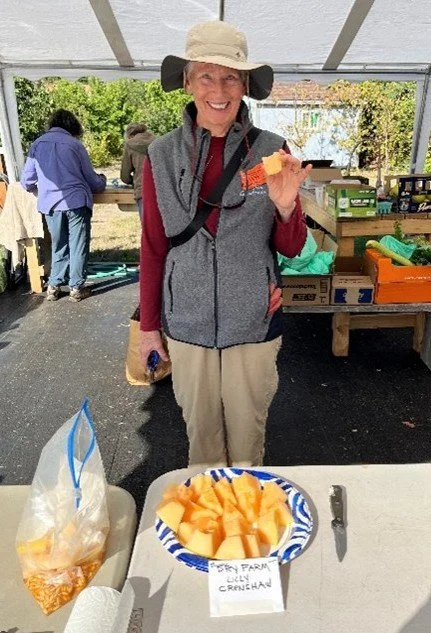
Melon flavor was excellent.
Trellised melons had less loss to rodents, birds, slugs, and rot.
Lilly’ Crenshaw plants produced the biggest (and heaviest) melons at about 4 lbs. each.
Arava’ Galia plants produced the most melons per plant at 4 melons/plant.
Melon Numbers
Total pounds all melons: 101.9 lbs.
Total pounds from trellised plants: 46.7 lbs.
Total pounds from untrellised plants: 49.1 lbs. (excluding 5.4 lbs. from untrellised honeydews)
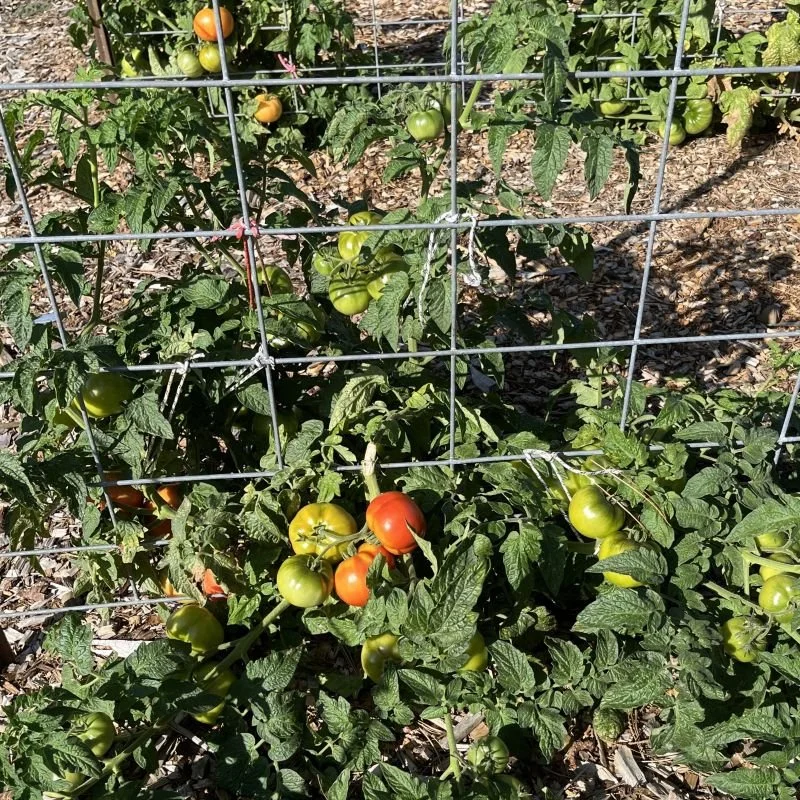
TOMATOES: We were interested in the survival and productivity of grafted dwarf tomatoes versus ungrafted ones. Three varieties were planted next to cattle fencing so we could tie them up as they got larger.
Tomato Lessons:
Grafted tomato seedlings were very small when we got them, and they were kept in our mini-greenhouse 2-3 extra weeks to allow them to grow bigger before planting. This resulted in later planting (June 20) for all the tomatoes and maybe later ripening.
Dwarf tomato flavor and texture was not outstanding.
Dwarf tomato foliage was very dense and heavy. We should have pruned out more foliage to allow more sun and heat to get to the fruit and kept on top of tying the plants to the trellises.
Tomato Numbers:
Total Pounds from Grafted Plants: 145 lbs.
Total Pounds from Ungrafted Plants: 116 lbs.
For 2 varieties (Confetti and Sweet Sue), grafted plants produced 20-28% more than ungrafted; however for these 2 varieties, a larger percentage of grafted vs ungrafted was still green at the final harvest.
For 1 variety (Nevsky), grafted and ungrafted plants produced about the same amount and the percentage of green at final harvest was also about the same.

2022 Dry Farming Trial Results
DG gardeners continued experimenting with growing a variety of vegetables without any inputs of fertilizer or water after planting. Before planting, the soil was well watered and plants watered in.
Four varieties of tomatoes, three winter squash, three summer squash and three melon varieties were planted along with five varieties of dry beans. Over 394 pounds were harvested. The Big Beef tomato produced the highest yield (49 pounds) of the tomatoes, and the Coast Romanesco zucchini produced the highest yield (31.5 pounds) among the summer squash varieties.
The biggest challenges encountered were initial establishment of the melons, invasion of squash bugs and determining the ripeness of the watermelon. The best surprises were the excellent flavor of the melon, in particular the D'Artangnan Charentais variety.
Here are some preliminary results from the 2022 Dry Farm area:

2021 Dry Farming Trial Results
We planted 10 different varieties that had done well in previous dry farm situations and had low levels of blossom end rot. Three of the varieties had both grafted and ungrafted plants and were the main focus of the trial. Three varieties were hanging storage tomatoes - Mala Cara, Piennolo del Vesuvio, and Petit de Ramallet. Plants were watered only once, when they were planted on May 25; all survived and produced fruit.
Ripe or nearly ripe tomatoes were harvested every Monday. Harvest peaked at the end of August. By Oct 11, only green tomatoes remained on the vines, at which time they were all harvested and donated.

Differences in Varieties: In line with expectations, the grafted individuals of any one variety produced more (weight-wise) than the ungrafted individuals. The hanging tomatoes had quite small fruit so that the total weight harvested was generally less than the other varieties.

Soil Moisture: Moisture sensors were installed at 4 depths in the dry farm area in 2019 and were used in 2021 to take soil moisture readings periodically. Lower numbers indicate more soil moisture and higher numbers indicate less. Moisture was lowest (highest readings) in early September at all depths. Following more frequent rain later in September, the shallowest meter readings began to drop. Soil moisture at deeper depths will take longer to replenish.

Taste Testing: Eight varieties were tasted by 12 MGs at the garden in August. Each MG rated the tomato from 1-5 (with 5 the best). Ratings were summed and divided by 12 for each final score. Despite hearing that dry farm tomato flavor is often superior to the flavor of irrigated tomatoes, we concluded that none of these varieties had great fabulous taste compared to varieties such as Sungold or other super sweet varieties.

Blossom End Rot (BER) : We recorded Blossom End Rot on 7varieties but only 4 (Astrakan, Baylor Paste, Mala Cara, and Teardrop) had rates above 3% of the total ripe tomatoes harvested. Much more damage was seen from rodent feeding, cracking/splitting, sunburn, and catface.
Heat And Disease Damage : Following the “heat dome” in late June, we made a heat damage assessment (plants rated 0, 1, 2, or 3 for no damage to high damage). Two plants (of 41) showed a low amount of damage and 1 fruit on another plant had typical heat damage. Subsequent growth and fruit production were not visibly affected, demonstrating that healthy dry farm tomatoes tolerated high temperatures extremely well.

In mid- to late-July, powdery mildew infected most of the plants, killing much of the lower foliage and causing stem lesions with visible fungal growth. Only a couple varieties (Mala Cara and Piennolo del Vesuvio) had few or no symptoms. Frequent high humidity at night and in the morning over a couple of weeks likely promoted infection. Although no plants died and fruit was not infected, loss of infected foliage exposed fruit to the sun so that a lot of sunburn and heat damage was seen in subsequent weeks.